How Constant Stress Led Me to Burnout and Exhaustion
Do you feel like you are constantly carrying more than you can realistically handle?
Like life never slows down long enough for you to truly rest?
Many women live under a constant weight of pressure:
- pressure to perform,
- pressure to keep up,
- pressure to hold everything together.
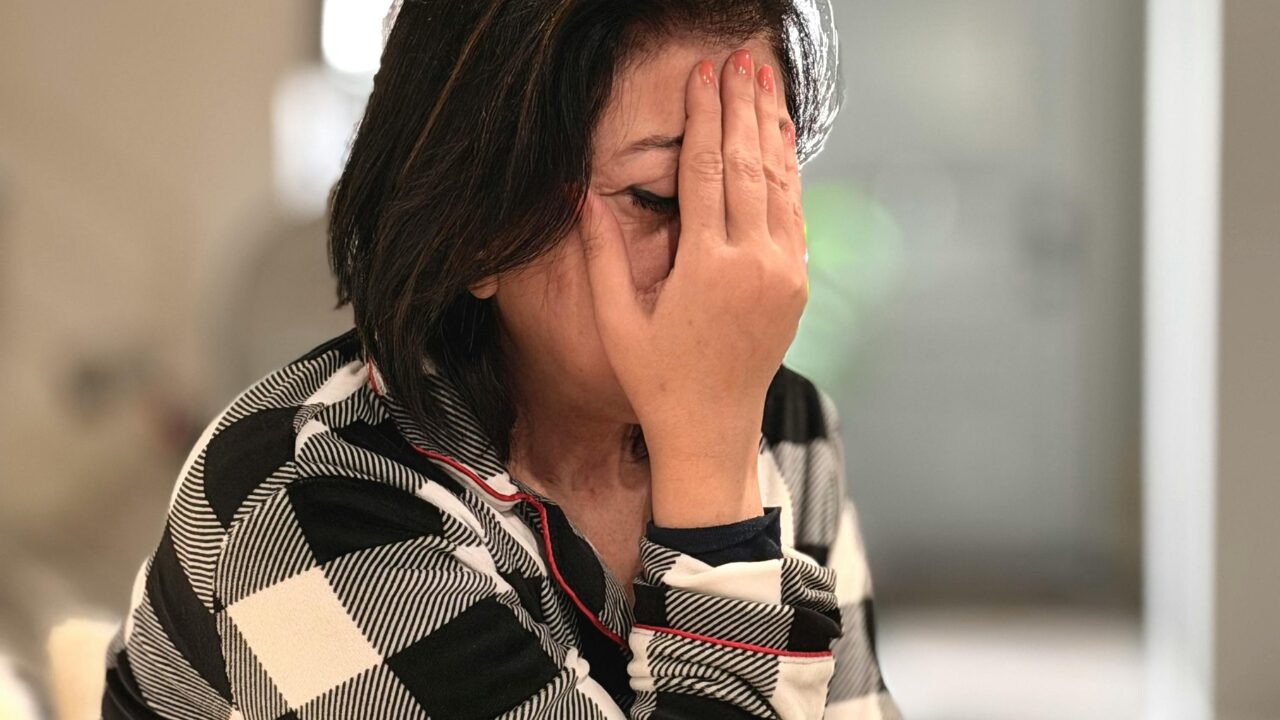
Over time, that constant stress begins affecting not only our emotions, but also our energy, sleep, mental clarity, and physical health.
I didn’t realize how deeply stress was affecting me until my body finally forced me to slow down.
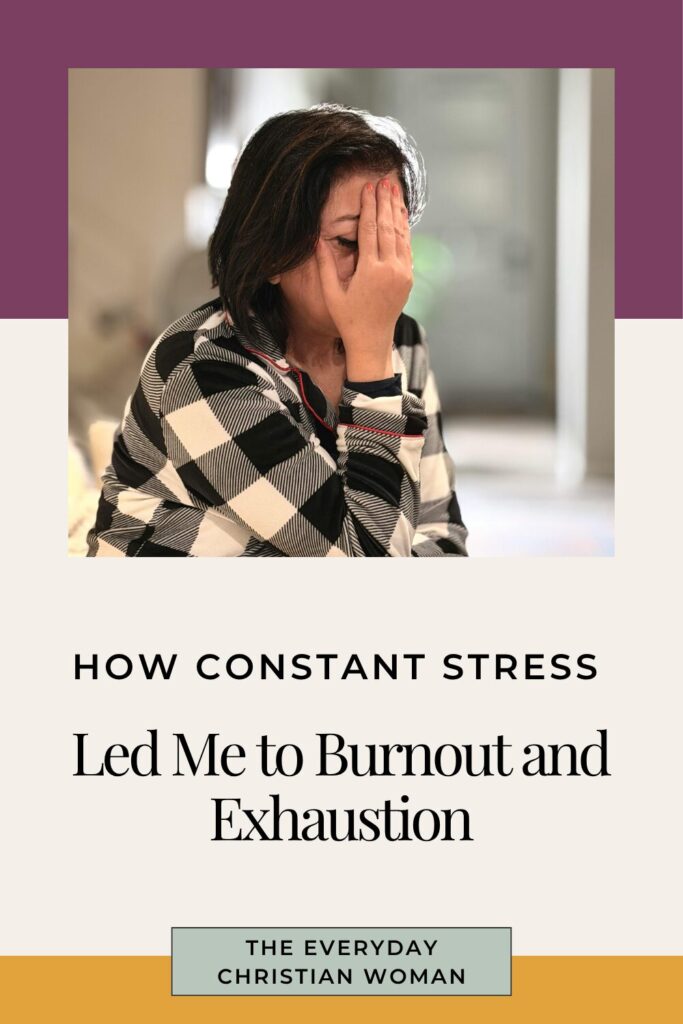
Why So Many Women Live Under Constant Stress
When we stop comparing our abilities with those around us, we are able to see clearly what we are capable of doing.
Reject the tendency to say, “But my friend over there has 7 children and still manages to do it all.”
God didn’t give you the grace He gave your friend. He gave you the grace He gave you to do the tasks He intended for you to do.
Stop comparing your capacity to someone else’s calling.
God did not ask you to carry another woman’s load.
Do not place on your shoulders expectations you cannot reasonably fulfill.
The Pressure I Put On Myself
All the signs were present that I was experiencing burnout, but as I am often tempted to do, I chose to only see what I wanted to see, not what was so obvious to everyone else.
Several friends asked me, “Are you under stress?” My answer was the same: “Not any more than other moms of two young children.”
The truth was, I didn’t want to admit I couldn’t do it all.
Despite the fact that the quality I value most in people is authenticity, I didn’t feel I could be authentic with those around me and admit that I was drowning in exhaustion.
I hid myself behind a mask of happy perfectionism, but the person behind the mask was crumbling.
I was self-destructing under a heavy burden of stress, personal expectations, and perceived expectations that I thought others had of me.
I could leave no room for failure.
I worked late into the night and woke up early to finish what was left undone at night.
I worked feverishly throughout the day, and it placed an enormous strain on my family.
This strain only led to further stress because I felt torn between a family who needed me and my expectations that screamed failure if I didn’t give them the attention they demanded.
The quest for a perfect image and my family, who only wanted a mom and wife who was present with them, left me flailing wildly out of control between the two extremes. I desperately wanted to be both: perfect and present.
But you can’t. It’s impossible.
Perfect is hiding.
Present is authentic.
You can’t have both.
The Day I Realized Something Had to Change
One day, in January, my husband came home from work, and like a hurricane, I blew out the door and left the kids with him.
I was having a meltdown.
Truth be told, it was only one in a long series of meltdowns I was having on a weekly basis.
My kids just didn’t understand how much work I had to do! Didn’t they get it?? Naptime was essential.
Non-optional.
Without them taking naps, work didn’t get done. When work didn’t get done, it meant even longer nights and even earlier mornings!
Why were my kids working against me??
I climbed into the car, slammed the door, jammed the car into gear, and spun out of the driveway.
Face red
Heart racing
Teeth clenched
I backed out of the driveway and sped down the road.
And prayed.
Halfway to the store, I had an epiphany – I was doing too much.
Now, most people wouldn’t call that an epiphany. They’d call it common sense. But that’s the problem with common sense, it isn’t often very common.
No – to me, this was an epiphany.
I had been telling myself over and over that I just needed to be better organized. But God spoke to my heart and said, “There isn’t a way to better organize all your responsibilities.
There simply are not enough hours in the day to do all you have to do. Something has to go.”
From that moment, I began to let responsibilities go.
You see, I learned a very important lesson that day.
You can do 100 things poorly, or a few things well.
But stress eventually causes us to do nothing well.
Not all stress is bad
There are times when stress is needed to help you accomplish a short-term task in an extraordinary way.
When your child is in mortal danger, you feel stress, run out into the road, and rescue him from oncoming traffic.
You perform an extraordinary feat that you would not otherwise do, in a way you would otherwise be incapable of doing.
It gives you the strength to add daily hospital visits to your otherwise packed schedule to sit by the side of your spouse who is enduring a health battle: cancer, a heart attack, stroke, and somehow you carry on.
Why?
Adrenaline. Cortisol. The stress hormones. They are there for a reason.
But they are not there to support our insecurities and pride that pile on unreasonable expectations that lead to constant pressure and undue strain on our families.
Our families deserve more than a wife and mom who is constantly at the end of her rope.
Living under constant stress can leave our bodies feeling exhausted, overstimulated, and unable to recover properly.
Many of us are living under levels of pressure our bodies were never designed to sustain long term.
God never intended for us to live this way.
The Habits That Helped Me Recover
1. Admit your imperfections and limitations
You will never fully recover until you are willing to lay down your pride and recognize your limitations. Every person has their own load limit. Some can do more, some should do less.
Just because your load limit is smaller than someone else’s doesn’t make you less capable as a person.
It doesn’t make you less valuable.
You will find that your ability to handle life and its pressures will increase when you recognize your load limit and live within its boundaries.
2. Learn to recognize your stressors
What makes you feel panic, pressure, that sinking feeling, or dread? Take one month and pay attention to those feelings.
Write down the triggers, and then ask yourself if those triggers are an essential part of your life or something you need to let go of.
3. Relieve yourself of all unnecessary commitments
Take time to assess your commitments and deadlines. Ask yourself:
- Is this necessary?
- Is this healthy for my family?
- Is this costing me peace?
- Is this something God actually asked me to carry?
The Best Yes by Lysa TeKeurst was crucial in helping me let go of the many commitments I made that should have gone to someone else.
If you’re a chronic “yes-sayer”, you need to learn the power and the joy of saying “no”.
Your “no” gives someone else the opportunity to say “yes”, and that becomes a blessing for everyone involved.
Repeat steps 1-3 until you have finally come to a place in your life where you live daily without pressure.
If you’re having trouble, ask your close friends and family to help you with this process. What helps is to list your responsibilities and write down every detail and deadline into a calendar.
If you sense that you are not able to adequately, and without stress and pressure, perform every task, something needs to change.
Recovery Requires Rest
For years, I treated sleep like a luxury instead of a necessity.
But recovery from exhaustion and burnout requires real rest.
Sleep is not laziness.
It is one of the ways we allow our bodies and minds to recover from constant stress. (Recommended reading: “Adrenaline and Stress“, Dr. Archibald Hart)
For decades, we’ve been led to believe that the most productive and efficient people are the ones who sleep less.
New research is showing that the opposite is true.
The more rested we are, the more productive and efficient we are as people.
Most women struggling with exhaustion and burnout will likely benefit from significantly more rest than they are currently getting.
Steps for Better Quality Sleep
1. Turn off all screens and devices 1 hour before bedtime. Yes, even your T.V. Or you can use these blue blocker glasses – they also help:

2. Remove your T.V. from your bedroom and make your bedroom a sleeping room only
3. Choose a relaxing routine before bedtime: shower, hot chamomile, lavender, or lemon balm tea, a relaxing book (not a mystery or intellectual read)
4. Make your room as dark as possible to eliminate all possible distractions while sleeping. I used to sleep with an eye mask:

5. Wear earplugs if necessary

Healing Often Begins With Letting Go
Recovery from exhaustion and burnout did not begin for me when I became more productive.
It began when I finally admitted that I could not keep living under constant pressure.
I had to let go of perfectionism.
I had to stop trying to prove my worth through performance.
Your worth is not measured by your productivity.
I had to accept that I was human.
Healing began when I started choosing peace over pressure and presence over perfection.
And little by little, my body and mind began to recover.
If you are overwhelmed right now, exhausted from trying to hold everything together, give yourself permission to slow down.
You do not have to carry everything.
And you do not have to heal overnight.
What is one responsibility or expectation you may need to let go of in this season?