
How Food Affects Exhaustion and Burnout
One of the hardest parts of recovering from exhaustion and burnout was changing the way I used food.
When I was overwhelmed and exhausted, I craved comfort foods constantly.
- Sugar
- Processed snacks
- Caffeine.
Foods that gave me a temporary boost but usually left me feeling even more drained afterward.
I didn’t realize how much food affected my mood and energy until I started paying attention to how I felt after eating.
Over time, I began to realize that what I ate directly affected:
- my energy levels
- mental clarity
- stress response
- sleep
- and overall sense of well-being.
Recovery didn’t happen through food alone.
But improving my nutrition became one important piece of rebuilding my health.
Why Food Matters When You’re Exhausted
When I changed my diet, I began noticing a huge improvement in how I felt, and one of the biggest factors was learning how to better manage my blood sugar.
Some foods comforted me emotionally while exhausting me physically.
I realized that the cycle of emotional eating for comfort followed by an energy crash was keeping me in a state of burnout.
When I stopped eating foods that constantly spiked my blood sugar, I noticed improvements in both my energy levels and overall well-being.
Over time, the chronic inflammation in my body began to calm down. My joints hurt less, my brain fog started to clear, and I stopped experiencing intense energy crashes after meals and snacks.
I also began sleeping better. For the first time since childhood, I was able to fall asleep more easily, and my insomnia improved significantly.
Best of all, the constant food noise quieted.
One of the biggest lessons I learned was the importance of stabilizing my blood sugar throughout the day.
Be Mindful of Blood Sugar
I no longer spent all day thinking about snacks or my next meal, and my body finally felt more stable and nourished.
One thing that helped me significantly was reducing highly processed carbohydrates and prioritizing meals with:
- healthy fats
- protein
- fiber
- vegetables
This helped me avoid the constant energy crashes and blood sugar spikes that left me feeling even more exhausted.
Be Mindful of Constant Snacking
For me, constantly snacking throughout the day seemed to worsen my energy crashes.
Learning to eat balanced meals and allowing my body longer periods between eating helped stabilize my energy levels.
However, everybody responds differently, especially during periods of burnout or hormonal imbalance.
Don’t Try to Change Everything Overnight
One of the biggest mistakes women make is trying to overhaul their entire diet at once.
- Start small
- Add more nourishing foods
- Drink more water
- Reduce processed foods gradually.
Small, sustainable changes are often far more effective than extreme diets.
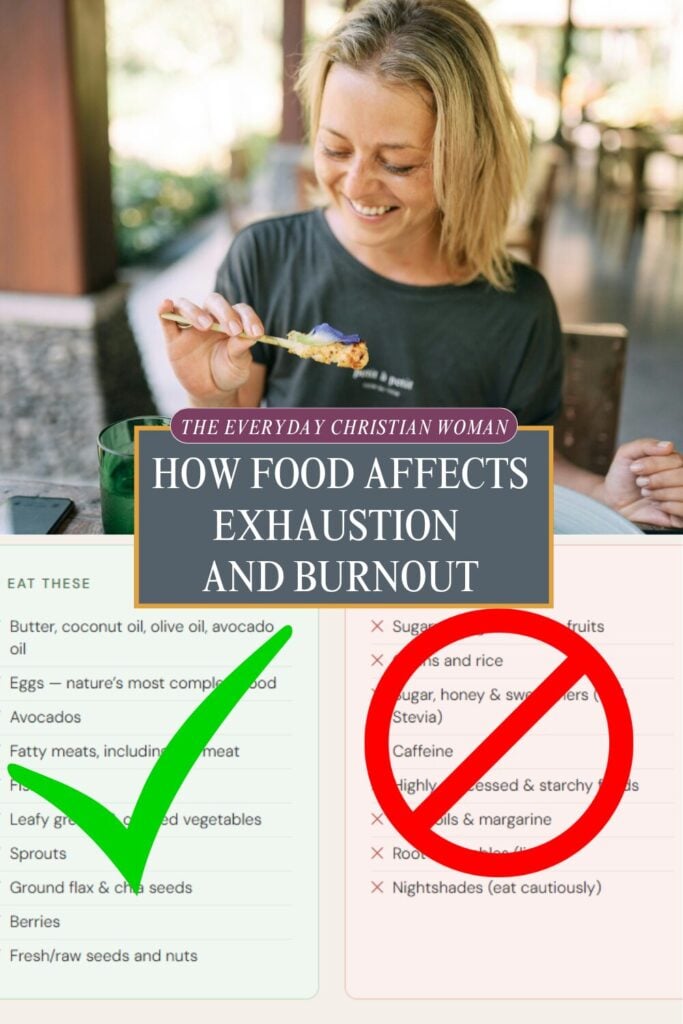
Foods That Helped Me Feel Better
- Butter, coconut oil, olive oil, avocado oil
- Eggs
- Avocados
- Fatty meats (even red meat)
- Fish
- Colored vegetables, sprouts, leafy greens. Limit root vegetables and eat nightshades cautiously.
- Ground flax and chia seeds
- Berries
- Fresh/raw seeds and nuts
Highly processed foods and oils tended to leave me feeling more sluggish and inflamed.
Foods That Increased My Fatigue
- Sugary fruits – while fruit is natural, some high-sugar fruits seemed to worsen my energy crashes and fatigue symptoms.
- Grains and rice
- Sugar, honey, and sweeteners – even be cautious with natural sweeteners like Stevia. They can cause an insulin response
- Caffeine
- Highly processed and starchy foods
- Seed oils and margarine – Highly processed oils and foods tended to leave me feeling more sluggish and inflamed.
Recovery Is Built Through Small Daily Choices
Food alone did not heal my exhaustion and burnout.
But learning how to nourish my body instead of constantly running on stress, sugar, and caffeine became an important part of my recovery.
Small changes really do add up over time.
You do not need a perfect diet overnight.
- Start small.
- Learn what foods help your body feel energized and nourished.
- Give yourself grace in the process.
Healing often happens slowly—but it does happen.
Resources That Helped Me Learn More About Nutrition and Burnout
While I don’t agree with every viewpoint perfectly, these resources helped me better understand the connection between food, stress, inflammation, and energy levels.